The Projects We Build to Prove That We Matter
How much of our ambition is about building something useful, and how much is about proving that our existence matters? A literary meditation on Ernest Becker and the things we leave behind.
- Ernest Becker
- Meaning
- Ambition
- Mortality
- Psychology
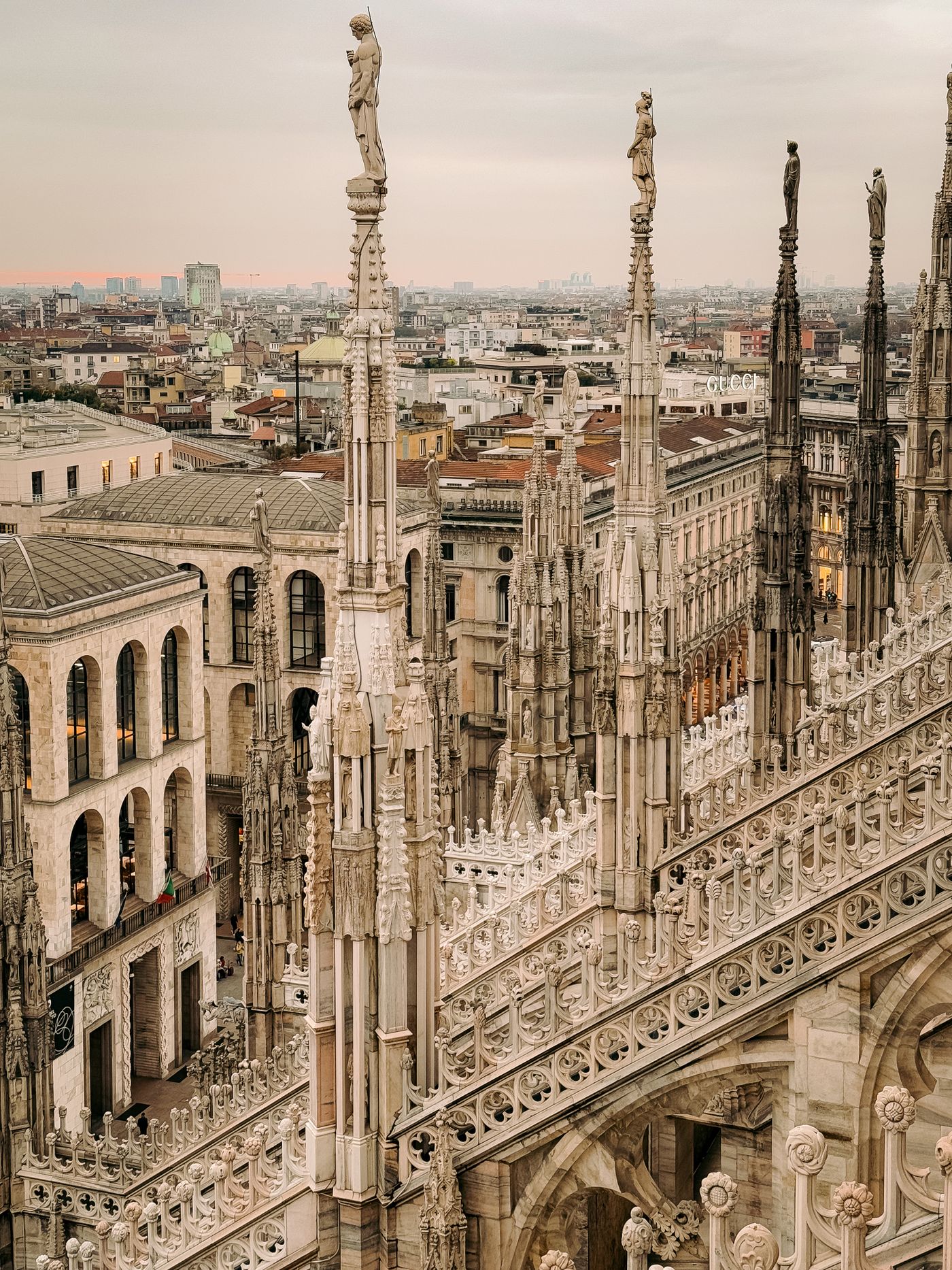
Look at what we build. The startup that will outlive its founder. The software deployed to servers in three continents, humming through nights the author will not live to see. The GitHub history that reads like a biography written in commits. The company, the product, the reputation, the carefully curated feed. Ernest Becker, in The Denial of Death, offered a framework for reading all of it: that a great deal of human endeavor is a monument — a heroic system, built to answer a question the builder cannot say out loud. It is not a comfortable book, and I do not think it is entirely right. But it is the most honest lens I have for looking at my own ambition, and it deserves a careful reading.
The hero project
Becker's argument, in its barest form, is this: we are animals who know we will die, and that knowledge is unbearable, so we build. Culture, in his telling, is not decoration — it is a hero system, a shared illusion of significance that lets us feel that our lives are not just brief and contingent. Every culture offers its members a way to be a hero: to matter, to be remembered, to be worth something beyond the meat. And here is the part that lands hardest: the hero project is not optional. The need for significance is not a flaw in a few ambitious people. It is the human condition, and the only variable is which hero system you buy into. The executive and the monk are both building something. One of them just knows it.
The modern monument
What does the hero project look like in our time? It looks like the things we already do, wearing different clothes. The company that bears your name — the founder's immortality project, with a logo and a legal entity. The product you shipped that people still use after you left. The career, with its ladder of promotions, each rung a small ceremony of significance. Money, which is significance with a balance sheet. The personal brand, the following, the name that is recognized in a room — the modern version of having your name carved in stone, except the stone is a timeline and the carving is a post. Even the modest versions are monuments: the documentation you wrote that outlives the team, the open-source contribution used by strangers, the child who carries your name and your habits. Every one of them is an answer to the same question, spoken in a different dialect: I was here. I mattered. Something of me will remain.
The work of our own hands
Here is where the lens turns sharp, because it does not spare the writer. What is a blog but a monument? What is an open-source repository but a cairn left on the trail, proof of passage? What is a portfolio but a carefully maintained reliquary of a career — objects saved because they demonstrate that their maker existed and was capable? I write these words partly because they need writing, and partly because a part of me is building the same thing every builder builds: something that will be here when I am not. The uncomfortable question is how to tell the two motives apart. When I add a feature, am I serving users or my obituary? When I polish this site at midnight, am I engineering or arranging flowers on my own tomb?
The framework, not the verdict
I want to be careful here, because Becker is a lens and not a verdict, and the popular reading of his work — that all ambition is death-anxiety, that every empire is a mausoleum — is a simplification he did not make. It is possible to build for reasons that have nothing to do with mortality: curiosity, love of craft, the pleasure of solving a hard problem, the desire to be useful to someone in particular. The framework does not claim that every ambition is a monument. It claims something subtler and more uncomfortable: that we often cannot tell the difference ourselves, that the monument motive and the craft motive are woven into the same thread, and that the ambition you think is pure usefulness may be carrying significance you never examined.
Why this matters now
It matters because unexamined hero projects have a cost. When significance is the fuel, the project can never be finished — because a monument that is complete is a monument that is no longer being built, and a stopped monument is a stopped heartbeat. The ambition that runs on meaning cannot rest, which is why the ladder has no top, why the product is never done, why the brand always needs more. It is also why the collapse hits so hard: the person whose project failed has not just lost a business — they have lost their immortality, and they grieve it as such. And it explains a quieter tragedy: the builder who reaches the top of the monument and finds the view is of other monuments, all built by people who were also trying to be remembered, and none of them looking back at you.
What do we do with a framework like this? I do not think the answer is to stop building. The answer is to build with the knowledge in the room — to look at the monument while you are building it and ask the question honestly: how much of this is usefulness, and how much is proof? The two can coexist. Some of the most durable things ever made — the tools, the books, the systems — were built by people who wanted to be useful and who also wanted to matter, and the work is not diminished by the second motive. What is diminished is the compulsion. A project built partly for significance can be put down, can be abandoned when it should be, can be finished. A project built only for significance cannot — it is a life-support system, and its owner is the patient.
Becker's deepest point may be that the monument never works, and that this is the point. No amount of code, no company, no name carved anywhere survives the way the builder wanted it to — the world erodes everything eventually, and the things that last do so on their own terms, indifferent to the meaning we poured into them. Which leaves the builder with a choice that is also a freedom: if the monument cannot carry your significance, then the significance has to live somewhere else — in the work itself, in the people who use it, in the days spent doing it. That is a smaller immortality. It is also the only one that is actually available. Build the thing because it needs building. Let the monument be a byproduct, not a motive. The projects we build to prove we matter will never prove it. The ones we build because they matter — those are the ones that do.
Written by Rajat Yadav. If you enjoyed this, say hello in the guestbook or read another essay.